

0912 300 549
 Email: sale02@ltdautomation.com.vn
Email: sale02@ltdautomation.com.vn
Email: sale02@ltdautomation.com.vn
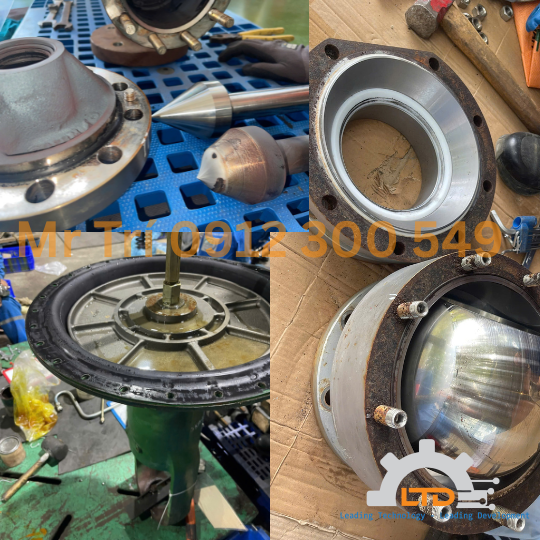


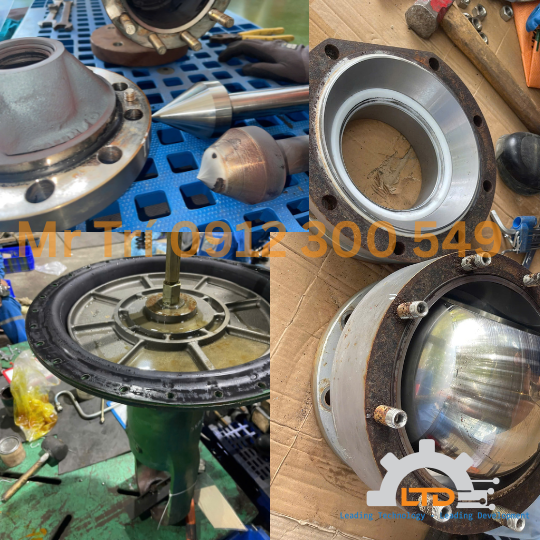
Control valve maintenance service LTĐ
LTD Automation is a distributor of all types of Valves and repairs Control Valves in Vietnam
==> Why should you choose to buy Control Valves at LTD Automation:
- Prestige creates the brand
- 100% genuine products
- Comprehensive after-sales policy support, quick installation - setup - calibration - warranty
- Products are warranted for at least 12 months
Contact for advice:
- Mr. Tri 0912 300 549
- sale02@ltdautomation.com.vn
Control Valve is the “heart” of the control loop in an industrial automation system. Unlike a simple on/off valve, a control valve continuously regulates flow, pressure or temperature according to a 4-20 mA, HART, PROFIBUS, or pneumatic-electric signal. Therefore, when maintaining or repairing a control valve, the technician must not only “fix the leak” but also perform a complete, accurate and verified calibration process to ensure the valve operates stably, linearly and responds correctly to control commands.
Every professional maintenance job begins with a comprehensive on-site inspection :
Determine if the valve is experiencing a mechanical or control (actuator/positioner/signal) failure.
Symptoms noted: pulsation, poor regulation, misalignment, incorrect flow, cavitation, high noise, weak actuator, control air leak, or trim-shaft jam.
Read the status and error log on the smart positioner (if any) to quickly isolate the cause.
Objective: Ensure that no errors are missed that affect control quality or cause downtime to recur after repair.
Before removal, the valve is:
Isolate from the pipeline, depressurize and cool properly (especially with high pressure steam-gas valves).
Mark the mounting direction, stroke, current positioner setting, and impulse/control signal air tube connection.
The technician then disassembles in a controlled manner to avoid damaging the seat, plug, or control accessories.
This is the most important step in regulating valve maintenance:
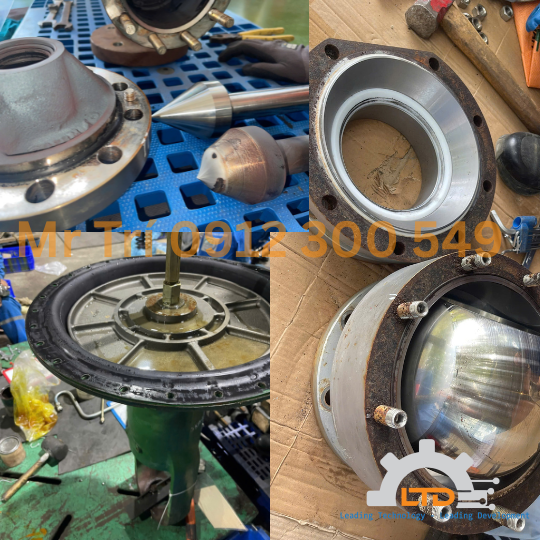
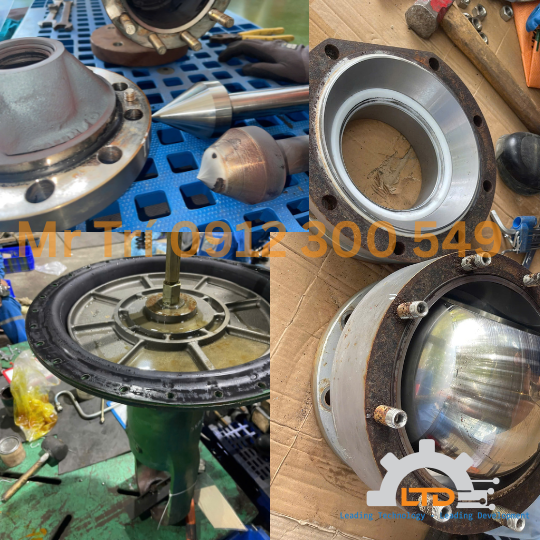
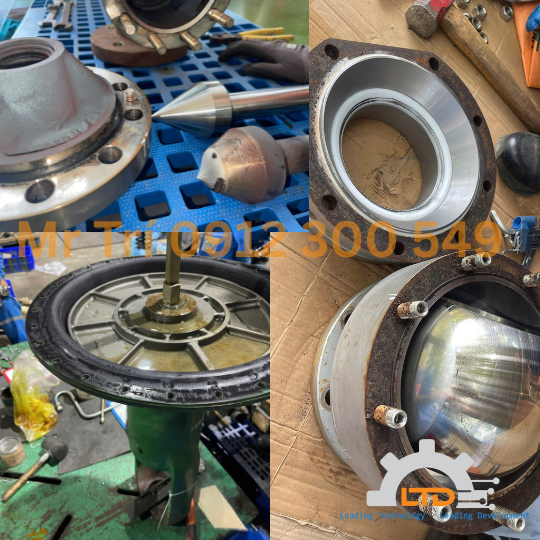
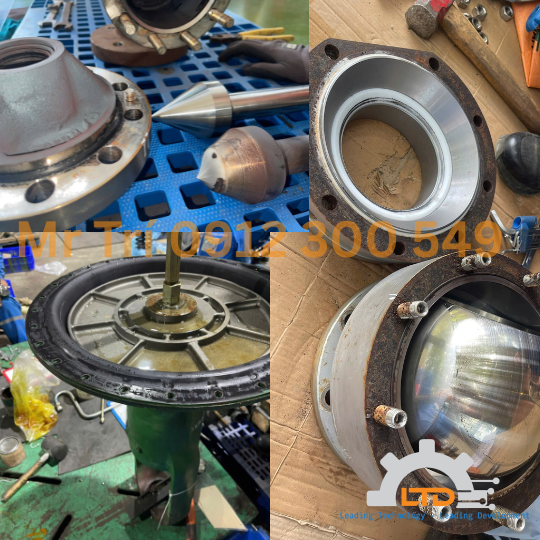
Measure and assess seat/plug/trim wear , check stem/axle for deflection.
Check sealing surfaces, seat settlement, packing/gasket condition, and valve body durability (corrosion/erosion).
Cleaning and surface treatment: cleaning residue, polishing, restoring or replacing trim – seat – packing when necessary.
Professional standards: Sealing surface has no scratches, sealing reaches allowable flatness, stem does not bend beyond tolerance.
Actuator determines the opening and closing force and the smoothness of regulation:
For pneumatic actuators: check diaphragm/diaphragm, piston, spring, air tube, internal/external air leakage , replace seal and lubricate mechanism.
With electric actuator: check motor, gearbox, torque, angle sensor, control driver .
For hydraulics: pressure gauge, solenoid valve, cylinder seal and oil level.
Goal: Restore nominal control force, smooth response, no lag, no force drop.
Here's the difference between “regular” and “professional” maintenance:
Stroke calibration, 0% and 100% reset, linear/equal percentage/quick opening.
Check that the valve responds correctly to 4-20 mA signal or digital communication.
Optimize hysteresis, deadband, opening and closing speed based on real application.
Required result: Smooth, linear response graph/parameters according to manufacturer's specifications, no jerks.
After reassembly, the valve is brought to a specialized test table :
Check for seat leakage in fully closed position .
Verify the regulation range and response to different loads.
If it is a steam/high pressure valve: run noise and vibration tests, and cavitation tests as needed.
Install the valve back into the system in the correct orientation, correct impulse line, and correct calibrated control configuration.
Acceptance with customers using actual measurements.
Consult additional appropriate periodic maintenance schedule to optimize lifespan and reduce downtime .
✔ Maintain closed-loop control accuracy in automation systems.
✔ Save big compared to replacement, but still operate according to specifications.
✔ Eliminate vibration, noise, and cavitation that cause rapid damage.
✔ Ensure safety for high pressure/steam/gas systems.
✔ Increase stability and readiness for 24/7 plant operation.


Control valve repair service not only helps businesses save 30-60% of costs compared to investing in new valves , but also ensures optimal control accuracy, safe operation and prolongs the life of the automation system . This is a mandatory service for factories using control valves in continuous operation, requiring high calibration and fast response.
LTĐ is a prestigious unit providing - repairing - calibrating Control Valves in the automation industry in Vietnam.
Contact us now for advice and best price support:
Mr. Tri - 0912 300 549




 Chính sách bán hàng
